



PDF Files require Adobe Reader software which is a free download from

Home > Corporate Information > News Releases > 2025 > December
News Release
December 18, 2025
National Institute of Informatics
NTT, Inc.
NTT EAST, Inc
NII, NTT, and NTT EAST Achieve World's First Successful Demonstration of Rapid Optical Wavelength-Path Switching and Addition Through Automated Optical Transport Layer Control Based on Network Conditions –Enabling traffic rerouting within 10 minutes during severe disasters–
News Highlights
- NII, NTT, and NTT EAST have successfully demonstrated the world's first*1 optical wavelength-path*2 switching with a wavelength conversion and addition through automated optical transport layer provisioning and control based on real-time network conditions. This breakthrough supports the continuity of network services during severe disasters within the APN*3 architecture.
- In the demonstration, NII's IP controller and NTT's APN controller*4 worked in coordination to automatically design and configure the optimal optical signal rate and wavelength for traffic rerouting. The results verified that traffic can be rerouted within 10 minutes without additional equipment or pre-reserved wavelength resources.
- Applying this technology to optical transport networks enables rapid traffic rerouting during large-scale disasters, contributing to the realization of a highly reliable communication infrastructure that supports advanced research activities.
TOKYO—December 18, 2025—National Institute of Informatics, Research Organization of Information and Systems, Inter-University Research Institute Corporation (Head Office: Chiyoda-ku, Tokyo; Director-General: Sadao Kurohashi; hereinafter "NII"), NTT, Inc. (Headquarters: Chiyoda-ku, Tokyo; President and CEO: Akira Shimada; hereinafter "NTT"), and NTT EAST, Inc. (Headquarters: Shinjuku-ku, Tokyo; President and CEO: Naoki Shibutani; hereinafter "NTT EAST") have successfully demonstrated the world's first automated optical transport layer control, enabling wavelength-path switching with a wavelength conversion and on-demand wavelength-path provisioning within the APN architecture. These capabilities help maintain network connectivity during severe disasters. The ability to rapidly switch and add optical wavelength-paths is expected to contribute to the realization of a highly reliable and flexible communication infrastructure that supports advanced research.
1.Background
The academic information network (SINET)*5, built and operated by NII, serves as Japan's nationwide academic information infrastructure for universities and research institutions. Through regional SINET connection points, institutions across the country are interconnected, forming a national communication network that supports Japan's academic research with ultra-high-speed links of 400 Gbps. In recent years, the volume of research data, including data generated by large-scale experimental facilities and big-data applications, has been increasing rapidly. As a result, strengthening communication reliability to enable uninterrupted transfer of these growing datasets has become increasingly important.
Large-scale disasters such as earthquakes, storms, and floods have repeatedly caused communication failures, including fiber cuts. When optical fibers are damaged during a severe disaster, network services are typically protected by immediately switching to a pre-configured backup path (protection switching)*6. Here, it is necessary to prepare for the risk of prolonged outage even after the switchover, and to consider switching to a new backup route. However, after protection switching, securing a new backup path (restoration switching)*7 requires advance preparation of wavelength resources and equipment. In addition, the assessment and selection of transport paths are often performed manually, which means that identifying and securing an alternative path and rerouting traffic can take several hours.
NTT has been developing technologies that enable rapid restoration switching by automatically identifying and switching to alternative paths during severe disasters, as well as on-demand optical wavelength-path provisioning. These efforts include the development of an APN controller that automatically evaluates and configures optimal optical signal rates, modulation formats*8, and wavelengths.
In this project, NTT EAST's existing commercial optical fiber cables were combined with NTT's transport equipment, APN controller, wavelength converter, and switches with optical transceivers to construct an optical transport network. By integrating NII's IP controller and data transfer server (MMCFTP)*9 , coordinated multi-operator control between the two controllers was achieved. This environment enabled demonstration experiments for two use cases: wavelength-path switching and on-demand wavelength-path addition (bandwidth upgrade).
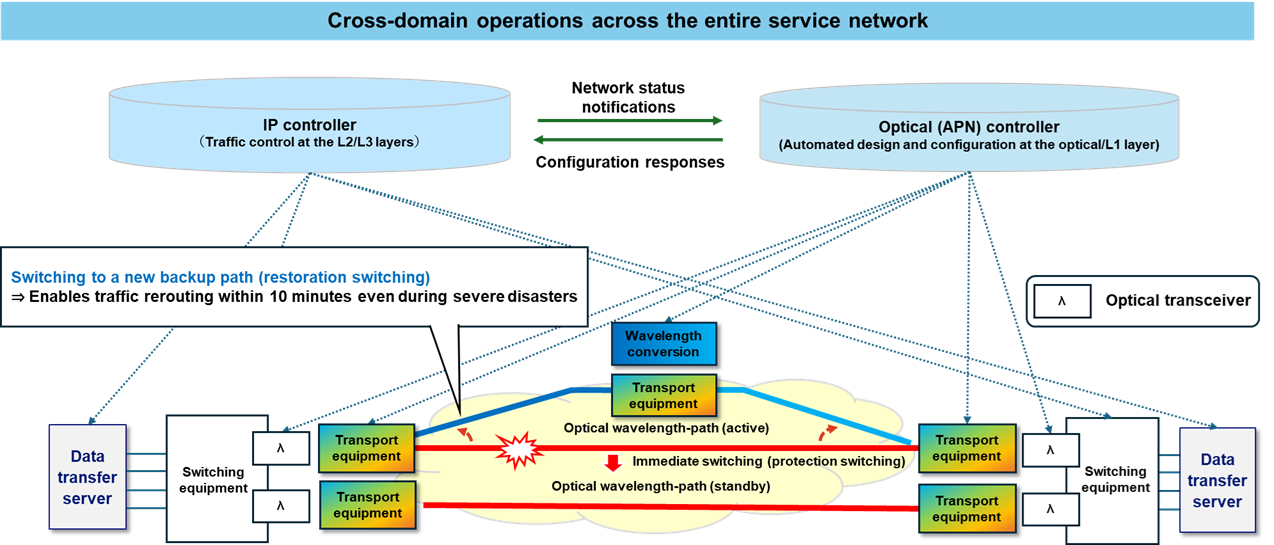 Figure 1 Overview of optical wavelength-path rerouting (restoration switching) through coordinated control using the APN controller and IP controller
Show enlarged view
2. Research Results
Two use-case verification tests were conducted in an optical transport network environment connecting three data centers (A, B, and C) in Tokyo via optical fiber.
Experiment 1 : Optical wavelength-path rerouting (Figure 2)
This experiment assumed a scenario where a severe disaster disrupts the transport path carrying advanced research traffic. The following sequence was tested to verify the system's ability to automatically perform restoration-based rerouting to recover traffic transfer.
- Simulated a path failure between data centers A and C in the optical transport network.
- Automatically designed a bypass path and performed pre-verification of transport characteristics and optical signal rate.
- Based on the pre-verification results, automatically configured an optical wavelength-path for the bypass path by reducing the optical signal rate from 200 Gbps (A to C) to 100 Gbps (A to B to C), then switched the transport path.
- The IP controller instructed the switch to perform traffic control based on the reduced optical signal rate, partially restoring traffic.
- Automatically configured an additional optical wavelength-path (A to B to C) with wavelength conversion at 100 Gbps to compensate for the reduced optical signal rate.
- The IP controller released the traffic control on the switch.
As the result of the experiment, we confirmed that all traffic transfer was restored within 10 minutes from the start of the rerouting operation.
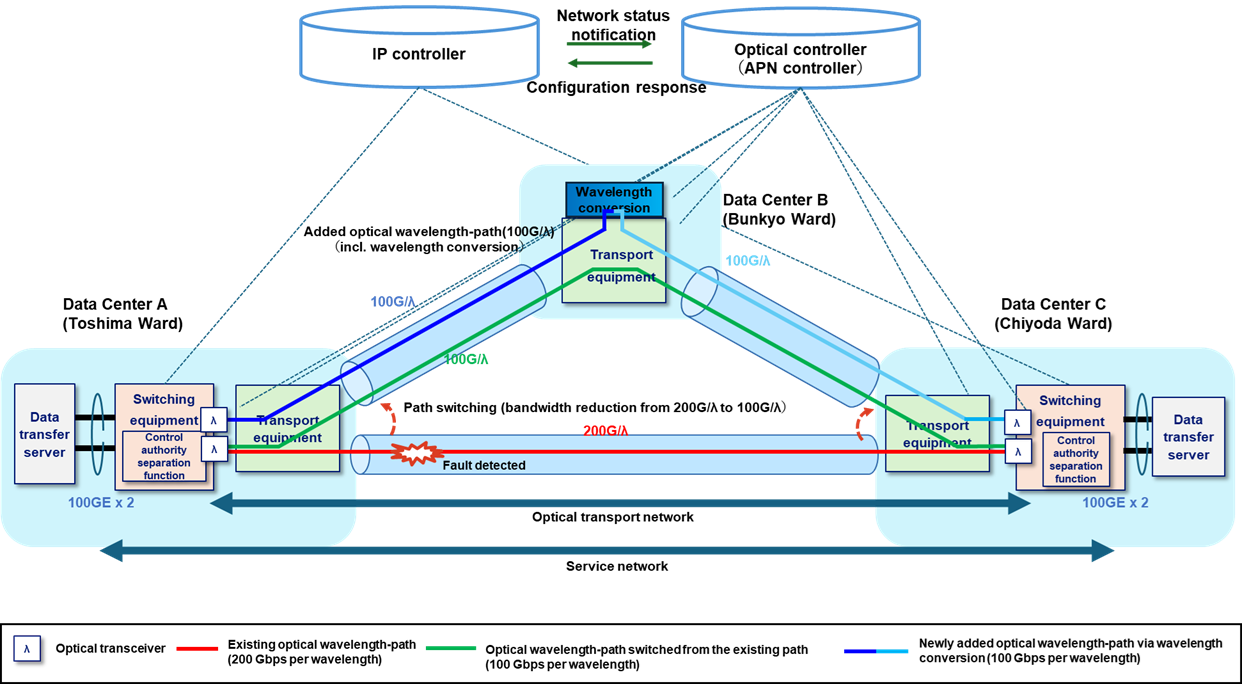 Figure 2 Configuration of Experiment 1
Show enlarged view
Experiment 2 : On-demand capacity expansion (Figure 3)
This experiment assumed a scenario where bandwidth needs to be expanded depending on the progress of advanced research activities. By applying the automated switching technique verified in Experiment 1, the automated on-demand configuration for capacity expansion was verified.
- The IP controller requested a capacity increase from 100 Gbps to 200 Gbps.
- The APN controller automatically configured an additional optical wavelength-path at 100 Gbps.
- The IP controller instructed the switch to perform traffic distribution control.
As the result of the experiment, we confirmed that all traffic was successfully transferred through the expanded optical wavelength-path.
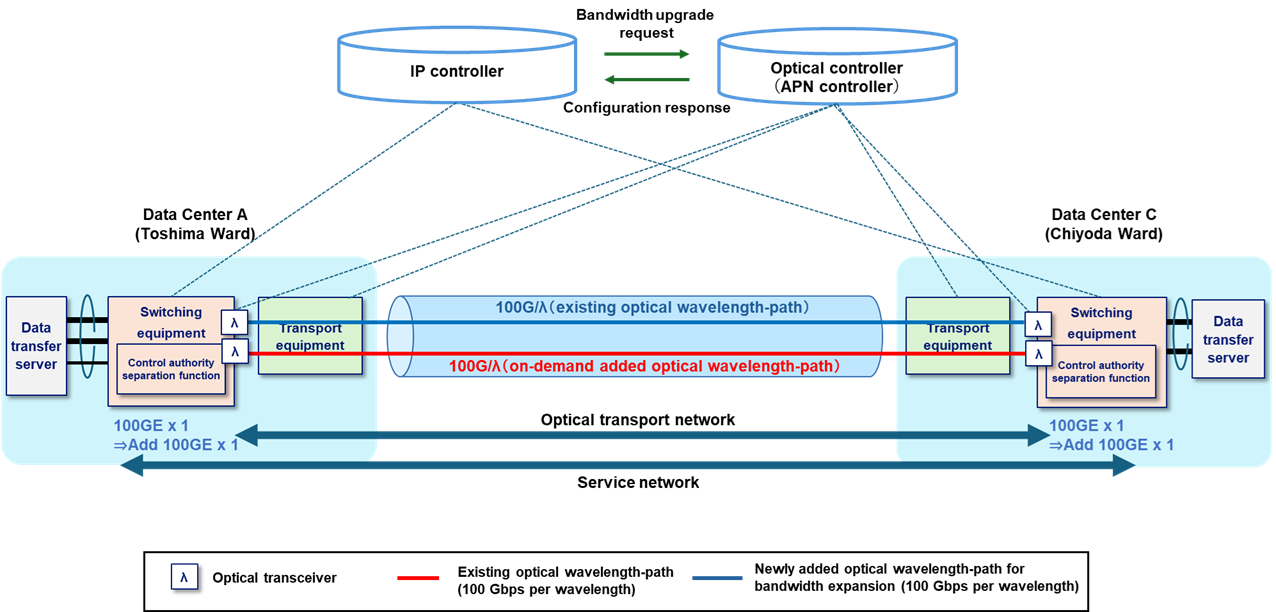 Figure 3 Configuration of Experiment 2
Show enlarged view
3. Key Technical Features
(1) APN controller enabling on-demand configuration of optical wavelength-paths
Under current operations, establishing or upgrading optical wavelength-paths requires multiple manual processes, including checking equipment and wavelength resources, selecting transport paths, and assessing transmission reachability based on optical fiber conditions. If end-to-end wavelength resources or transmission reachability cannot be secured, the transport path or transmission method (such as modulation format) must be reconsidered, which can delay provisioning by several hours or more.
The APN controller technology developed in this project automates and centrally manages the design of optimal paths, wavelengths, and transmission methods, including those involving wavelength converters, even when end-to-end wavelength resources cannot be secured. This enables rapid provisioning and control operations such as transport path switching.
(2) Wavelength conversion technology
Configuring an optical wavelength-path typically requires securing the same wavelength end to end. However, in scenarios such as major disasters requiring multiple on-demand bypass paths, or when wavelength resources are constraint, this may not be possible. Traditionally, this issue has been addressed by installing expensive transponders along the path to convert the optical signal into an electrical digital signal before wavelength conversion, which increases latency and power consumption due to digital signal processing.
The newly developed technology enables wavelength conversion with minimal additional latency and power consumption, allowing flexible and efficient configuration of optical wavelength-paths.
(3) Control-domain separation technology for flexible service delivery models
As optical transceivers*10 continue to be miniaturized, routers and switches capable of directly housing these transceivers have begun to emerge. This allows them to connect directly to the APN, reducing equipment footprint and lowering equipment costs. However, APN connectivity requires configuration tasks such as setting wavelengths and laser power for the optical transceivers and performing optical-layer monitoring, which raises concerns about operational complexity.
With this technology, layer 2 and layer 3 functions traditionally handled by routers and switches, such as routing and VLAN configuration, are separated from optical-layer control required for APN connectivity. By allowing the APN service provider to manage optical transceivers through the APN controller, service network operators and users can utilize high-speed, low-latency transmission services without needing to be aware of optical-layer operations.
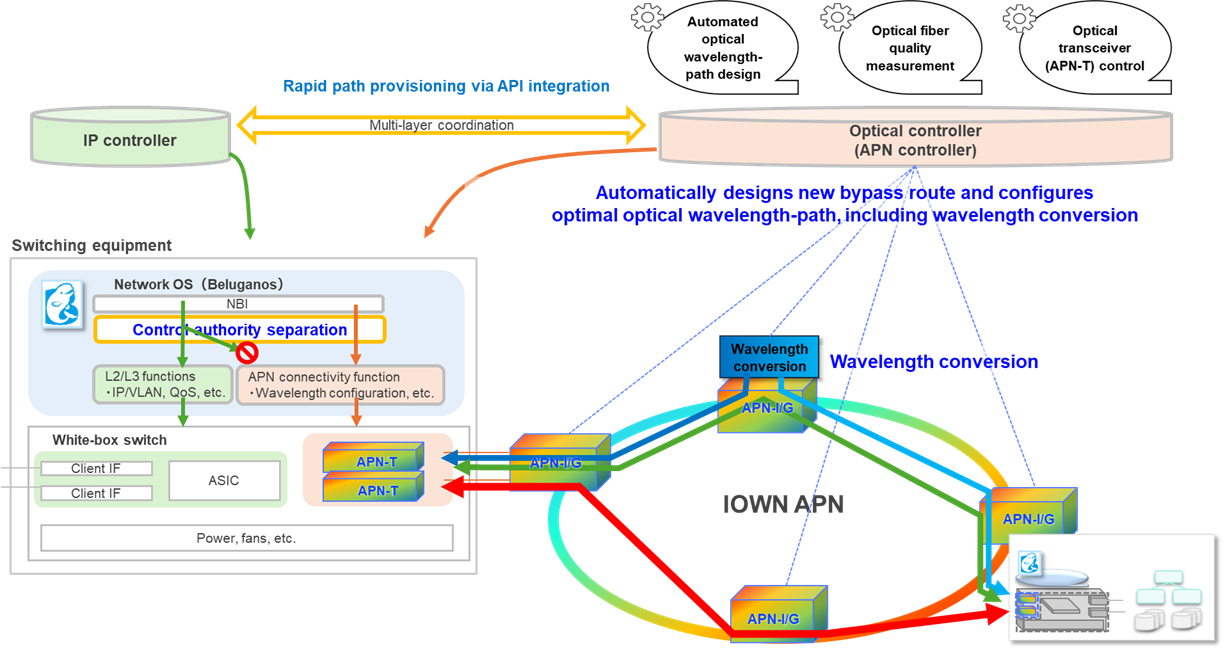 Figure 4 Implementation overview of the key technologies
Show enlarged view
4. Roles of Each Organization
| Organizations | Roles |
|---|---|
| NII |
|
| NTT |
|
| NTT EAST |
|
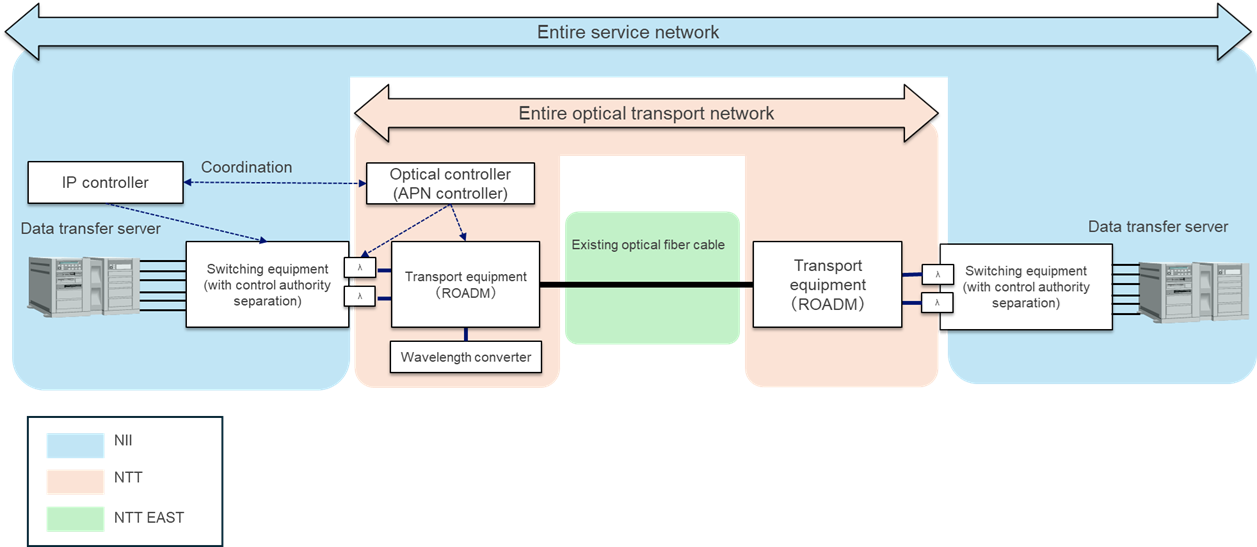 Figure 5 Roles of each organization
Show enlarged view
5. Future Outlook
This demonstration confirmed that multi-layer coordination enables automatic discovery and provisioning of backup paths during a major disaster, allowing traffic rerouting within 10 minutes. These results are expected to further improve the reliability of optical transport networks.
NII supports the advancement of academic research and education throughout Japan by developing SINET, one of the world's highest-performance network platforms. NII will continue to pursue higher speed and capacity, as well as improved reliability and stability.
NTT will continue to promote the wider deployment of IOWN APN and advance the development of technologies that enhance the reliability of optical transport networks and enable on-demand network provisioning, along with studying new use cases.
NTT EAST will continue to pursue further advancements toward the realization of services that fully leverage a high-capacity and highly reliable optical transport network.
6. Related Past Press Releases
- November 12, 2024: “Long-haul optical transmission technology for effective use of wavelengths when providing end-to-end optical paths”
https://group.ntt/en/newsrelease/2024/11/12/241112b.html
- March 31, 2025: “Achieving Automated 1Tbps-Class Optical Network Configuration in IOWN APN Based on Open Standards”
https://group.ntt/en/newsrelease/2025/03/31/250331a.html
About NII
The National Institute of Informatics (NII) is the only academic research institute in Japan focused on the field of informatics, with a comprehensive range of research activities that covers everything from long-term basic research to real-world studies that attempt to address current social issues.
As an inter-university research institute, NII also deploys various services, such as building and operating the Science Information NETwork (SINET), providing academic content and service platforms, and developing research data infrastructures. It promotes the further growth of these services by offering its research-based expertise and interactive feedback. NII works on both research and service to create future value through informatics.
About NTT
NTT contributes to a sustainable society through the power of innovation. We are a leading global technology company providing services to consumers and businesses as a mobile operator, infrastructure, networks, applications, and consulting provider. Our offerings include digital business consulting, managed application services, workplace and cloud solutions, data center and edge computing, all supported by our deep global industry expertise. We are over $90B in revenue and 340,000 employees, with $3B in annual R&D investments. Our operations span across 80+ countries and regions, allowing us to serve clients in over 190 of them. We serve over 75% of Fortune Global 100 companies, thousands of other enterprise and government clients and millions of consumers.
About NTT EAST
NTT EAST's commitment to telecommunication services began approximately 150 years ago, when we initiated efforts to propagate the use of telephones. Our mission has been steadfast to connect people and to foster understanding through expanding the area of telecommunication services and stabilizing the services.
Today, Japan boasts an optical fiber network coverage rate exceeding 99%, providing comprehensive communications infrastructure. As we gaze into the future, our focus is shifting towards fostering a sustainable, circular society. Our dedication to value creation through our nationwide communications infrastructure aims at enriching society and local communities. In close collaboration with these communities, we strive to create value. This value is then disseminated broadly using digital technology and information and communication technology (ICT). By carrying out these endeavors, we are committed to becoming a partner in shaping a future society that emphasizes diversity and sustainability.
[Glossary]
- *1The world's first:As of December 18, 2025, according to NTT
- *2Optical wavelength-path: An optical wavelength-path refers to the path taken by an optical signal as it is transmitted from a transmitter to a receiver within an optical transport network
- *3APN (All-Photonics Network) :APN introduces photonics-based technologies throughout the entire system from the network to end devices. This approach enables ultra-low power consumption, high quality and high capacity transmission, and low latency performance that are difficult to achieve with conventional electronics-based technologies. For more details, please refer to the following page:
What is APN? https://group.ntt/en/group/iown/function/apn.html - *4APN controller:APN controller (APN-C) provides essential functions to operate APN, including end-to-end optical wavelength-path configuration through control of optical transport equipment and optical transceivers (and transponders), service activation and maintenance, and various operational information collection. It is one of the key components for realizing APN.
- *5SINET:SINET is an academic network that supports joint use of large-scale research facilities, strengthens collaboration across research fields, promotes international research cooperation, enables academic information sharing and big data exchange, enhances the quality of university education, and supports regional revitalization through knowledge-driven initiatives and industry-academia collaboration. Nodes are deployed in all prefectures, interconnected by 400 Gbps links (and two 100 Gbps links for Okinawa), providing services to more than 1,000 universities and research institutions.
- *6Protection switching :Protection switching is a redundancy technology that minimizes service downtime during failures in optical transport networks by immediately switching traffic to a pre-established backup path. To ensure rapid switchover, unused backup paths are prepared in advance and optical signals are kept continuously active on the backup links.
- *7Restoration switching:Restoration switching is a technology that restores traffic during optical transport network failures by dynamically searching for a new bypass path and remotely adjusting the wavelength and path of existing optical transceivers. It is based on CDC-ROADM (Colorless, Directionless, Contentionless Reconfigurable Optical Add/Drop Multiplexer), which maximizes flexibility in optical signal routing.
- *8Modulation format (Transmission format) : A modulation format refers to the combination of baud rate (the number of modulation events per second) and modulation scheme (such as QPSK or 16QAM). Even at the same signal rate, different combinations of baud rate and modulation scheme result in significantly different transmission distances. Therefore, selecting an appropriate modulation format is important to satisfy requirements for signal rate and transmission distance.
- *9MMCFTP:MMCFTP is a file transfer protocol that achieves stable, ultra-high-speed data transfer by dynamically adjusting the number of TCP connections based on network conditions such as latency and packet loss. It is characterized by the use of a large number of simultaneous TCP connections when transferring big data.
- *10Optical transceiver :A device that transmits and receives optical signals.
List of attachments
- Figure 1 Overview of optical wavelength-path rerouting (restoration switching) through coordinated control using the APN controller and IP controller
- Figure 2 Configuration of Experiment 1
- Figure 3 Configuration of Experiment 2
- Figure 4 Implementation overview of the key technologies
- Figure 5 Roles of each organization
Information is current as of the date of issue of the individual press release.
Please be advised that information may be outdated after that point.