Digital × Hokusai in collaboration with the Smithsonian’s National Museum of Asian Art

NEWS
-
We have launched the website for the exhibition.
Outline
- Date
-
December 15, 2026 – March 28, 2027
* Closed: Mondays (If Monday is a holiday, then Tuesday), The year-end and New Year’s holiday (December 28–January 4), Maintenance day (February 14)
- Hours
-
11:00–18:00(Admission until 30 minutes before closing)
- Venue
-
NTT InterCommunication Center [ICC] Gallery B
Tokyo Opera City Tower 4F, 3-20-2 Nishishinjuku, Shinjuku-ku, Tokyo 163-1404, Japan 2 minutes’ walk from Hatsudai Station East Exit on the Keio New Line - Admission fee
-
Adults 1,200(1,100) Yen, University Students 1,000(900) Yen
* Rates shown in parentheses are for groups of more than 14 persons.
* Admission free: Disabled persons and their attendants / Persons 65 years and older / High school students and younger (proof-required), Persons who have ‘ICC annual Passport’
* You can use the “Gurutto Pass 2026”.
* If you present an admission ticket for a special exhibition currently being held at the Tokyo Opera City Art Gallery, you may enter this exhibition at the group rate.
- Inquiries
-
e-mail bunka-ml@east.ntt.co.jp
 0120-114677 ( Recorded user guide. Japanese language only
)
- Organizer
-
NTT EAST, Inc.
- Planning and Operation
-
NTT ArtTechnology Corporation
- Special Cooperation
-
The Smithsonian’s National Museum of Asian Art
- Cooperation
-
Ars Techne Co., The Hokusai-kan Museum, Roland DG Corporation, Circular Society Innovation Institute (NTT EAST, Inc.)
- Sponsors
-
NTT, Inc., NTT DOCOMO, INC., NTT DOCOMO BUSINESS Corporate Headquarters, NTT DOCOMO Financial Group, Inc., NTT DATA Group Corporation, NTT DATA Japan Corporation, NTT WEST, Inc., NTT Urban Solutions, Inc., NTT Anode Energy Corporation
Overview
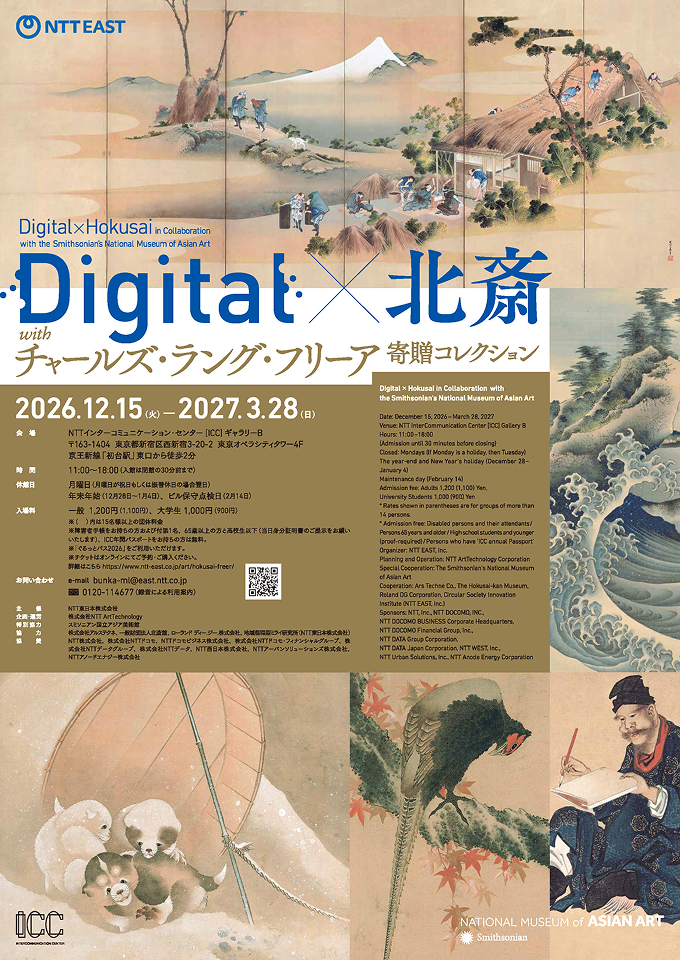
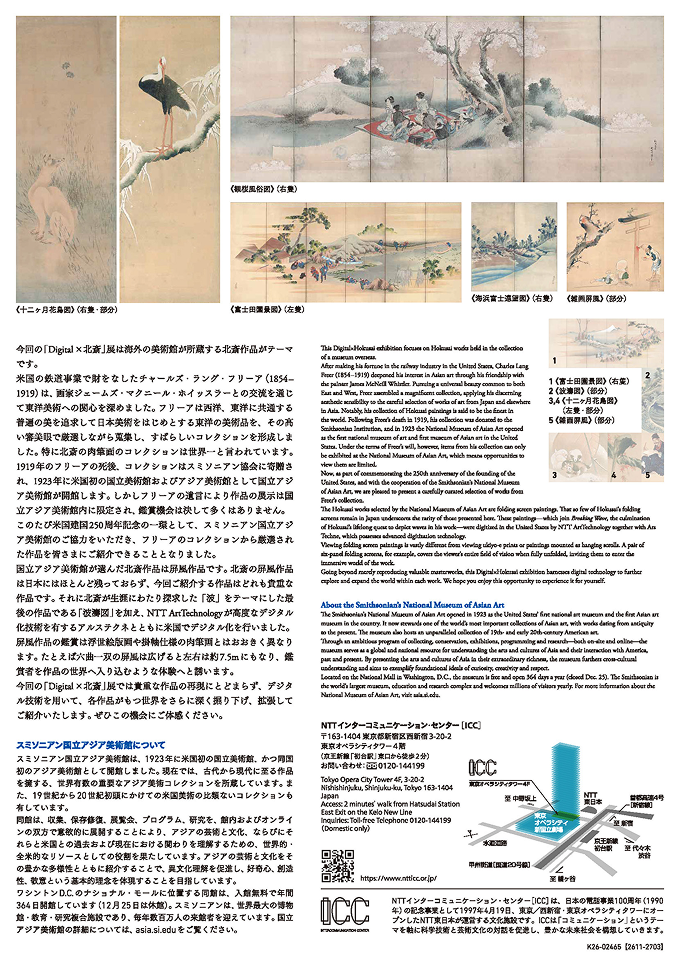
This Digital×Hokusai exhibition focuses on Hokusai works held in the collection of a museum overseas.
After making his fortune in the railway industry in the United States, Charles Lang Freer (1854–1919) deepened his interest in Asian art through his friendship with the painter James McNeill Whistler. Pursuing a universal beauty common to both East and West, Freer assembled a magnificent collection, applying his discerning aesthetic sensibility to the careful selection of works of art from Japan and elsewhere in Asia. Notably, his collection of Hokusai paintings is said to be the finest in the world. Following Freer’s death in 1919, his collection was donated to the Smithsonian Institution, and in 1923 the National Museum of Asian Art opened as the first national museum of art and first museum of Asian art in the United States. Under the terms of Freer’s will, however, items from his collection can only be exhibited at the National Museum of Asian Art, which means opportunities to view them are limited.
Now, as part of commemorating the 250th anniversary of the founding of the United States, and with the cooperation of the Smithsonian Institution’s National Museum of Asian Art, we are pleased to present a carefully curated selection of works from Freer’s collection.
The Hokusai works selected by the National Museum of Asian Art are folding screen paintings. That so few of Hokusai’s folding screens remain in Japan underscores the rarity of those presented here. These paintings—which join Breaking Waves, the culmination of Hokusai’s lifelong quest to depict waves in his work—were digitized in the United States by NTT ArtTechnology together with Ars Techne, which possesses advanced digitization technology.
Viewing folding screen paintings is vastly different from viewing ukiyo-e prints or paintings mounted as hanging scrolls. A pair of six-panel folding screens, for example, covers the viewer’s entire field of vision when fully unfolded, inviting them to enter the immersive world of the work.
Going beyond merely reproducing valuable masterworks, this Digital×Hokusai exhibition harnesses digital technology to further explore and expand the world within each work. We hope you enjoy this opportunity to experience it for yourself.
About the Smithsonian’s National Museum of Asian Art
The Smithsonian’s National Museum of Asian Art opened in 1923 as the United States’ first national art museum and the first Asian art museum in the country. It now stewards one of the world’s most important collections of Asian art ※, with works dating from antiquity to the present. The museum also hosts an unparalleled collection of 19th- and early 20th-century American art.
Through an ambitious program of collecting, conservation, exhibitions, programming and research—both on-site and online—the museum serves as a global and national resource for understanding the arts and cultures of Asia and their interaction with America, past and present. By presenting the arts and cultures of Asia in their extraordinary richness, the museum furthers cross-cultural understanding and aims to exemplify foundational ideals of curiosity, creativity and respect.
Located on the National Mall in Washington, D.C., the museum is free and open 364 days a year (closed Dec. 25). The Smithsonian is the world’s largest museum, education and research complex and welcomes millions of visitors yearly. For more information about the National Museum of Asian Art, visit asia.si.edu ※.
※External links to the Smithsonian's National Museum of Asian Art website.
Works
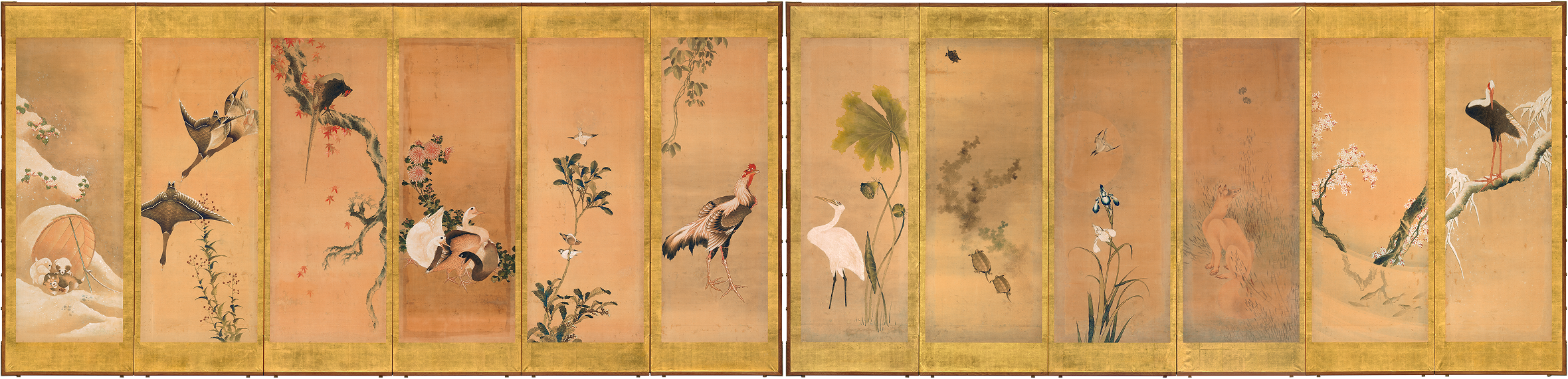
Birds, Animals, and Plants Representing the Twelve Months
Katsushika Hokusai (1760–1849)
ca. 1820–1835
Pair of six-panel folding screens; ink and color on paper
Each screen: 179.5 cm × 376.0 cm
National Museum of Asian Art, Smithsonian Institution, Gift of Charles Lang Freer, F1904.179–180
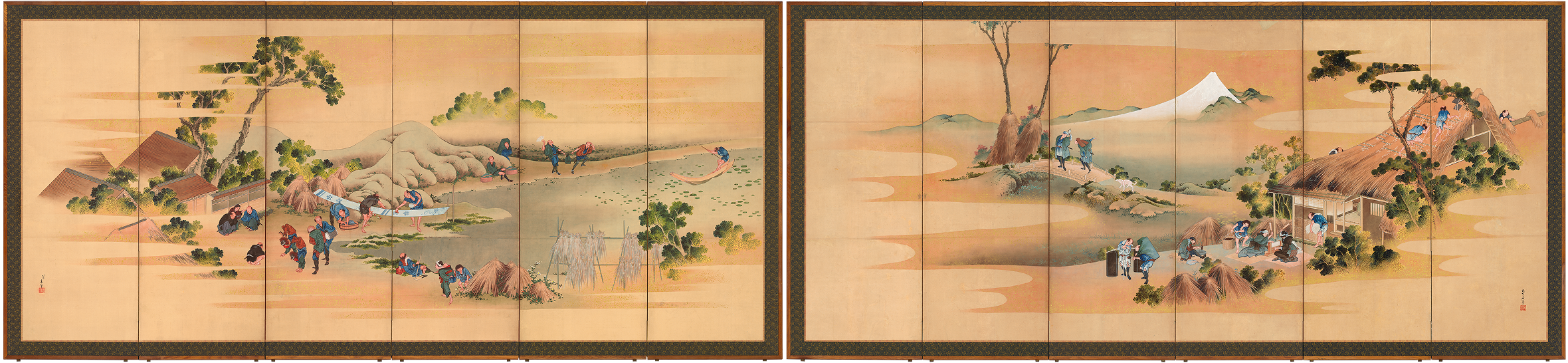
Country Scenes and Mount Fuji
Katsushika Hokusai (1760–1849)
ca. 1830–1832
Pair of six-panel folding screens; ink, color, and gold on paper
Each screen: 150.6 cm × 351.0 cm
National Museum of Asian Art, Smithsonian Institution, Gift of Charles Lang Freer, F1902.48–49
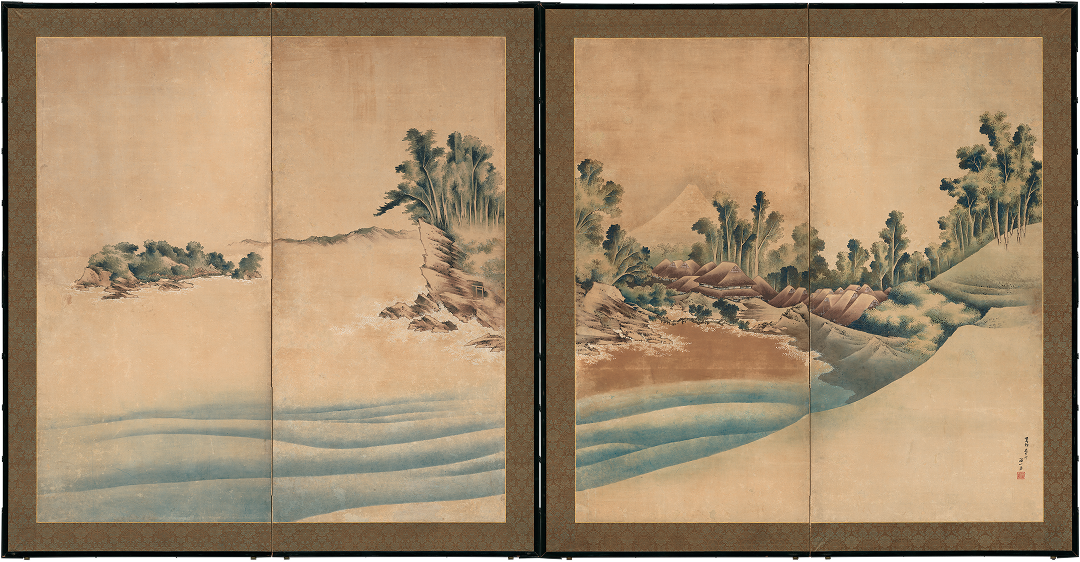
Mount Fuji and Enoshima
Katsushika Hokusai (1760–1849)
ca. 1825–1831
Pair of two-panel folding screens; ink and color on paper
Each screen: 163.3 cm × 157.6 cm
National Museum of Asian Art, Smithsonian Institution, Gift of Charles Lang Freer, F1904.175–176
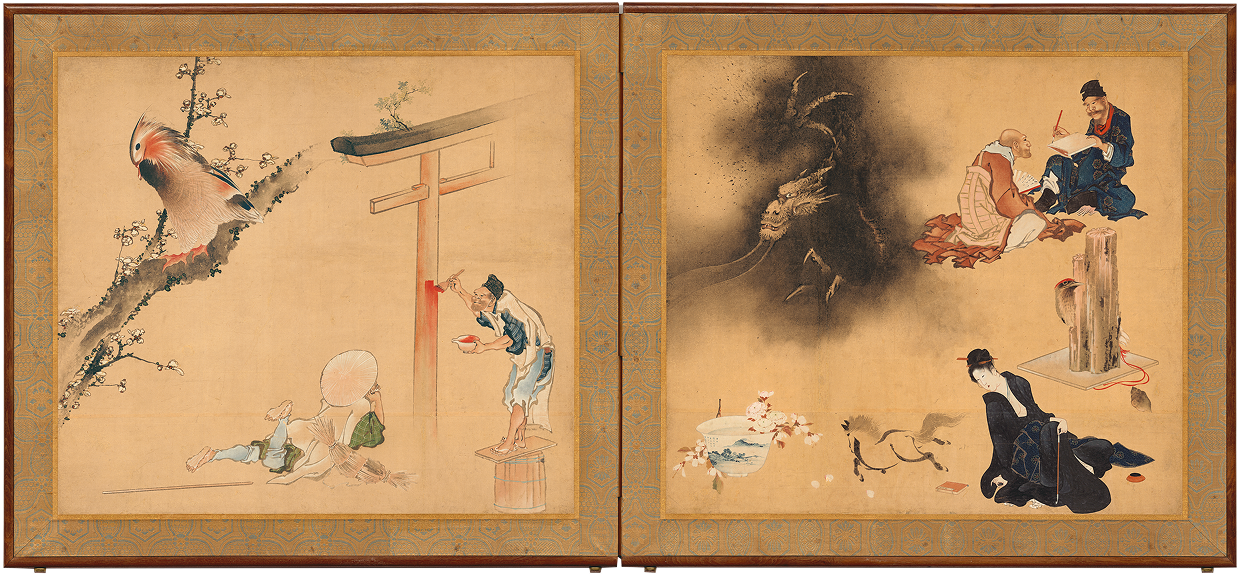
Various Scenes
Katsushika Hokusai (1760–1849)
ca. 1810–1820
Two-panel folding screen; ink and color on paper
Each panel: 70.4 cm × 80.0 cm
National Museum of Asian Art, Smithsonian Institution, Gift of Charles Lang Freer, F1902.3
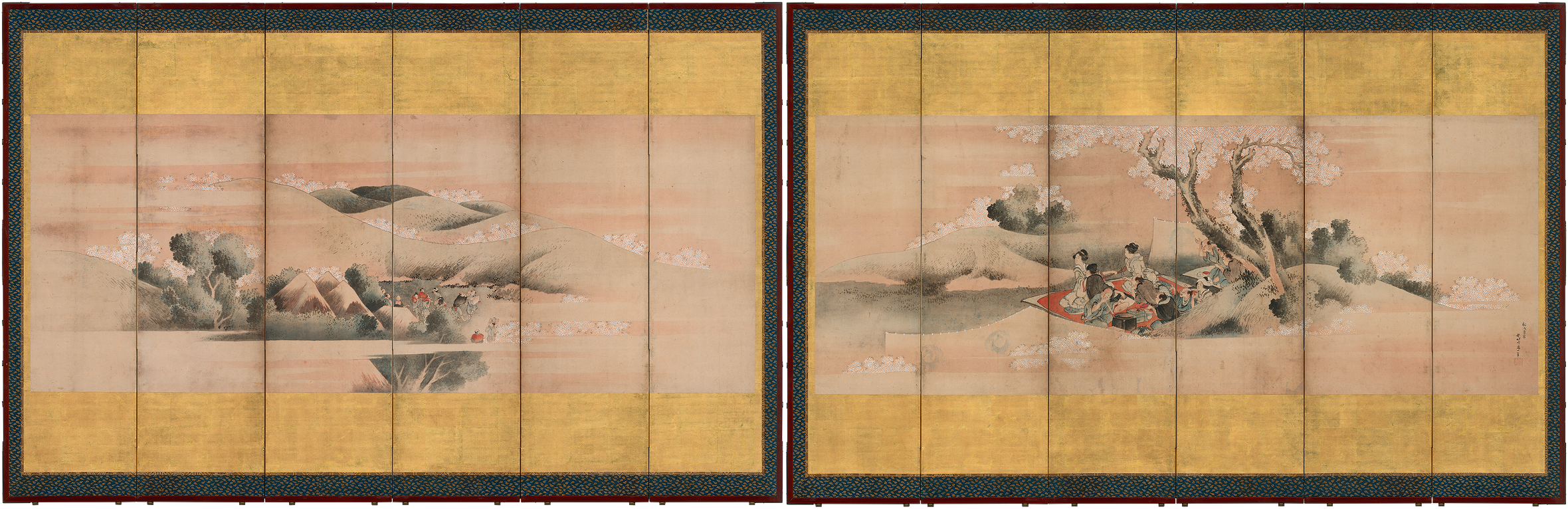
Viewing Cherry Blossoms
Katsushika Hokusai (1760–1849)
ca. 1820s–1830s
Pair of six-panel folding screens; ink and color on paper
Each screen: 82.4 cm × 218.3 cm
National Museum of Asian Art, Smithsonian Institution, Gift of Charles Lang Freer, F1903.143–144
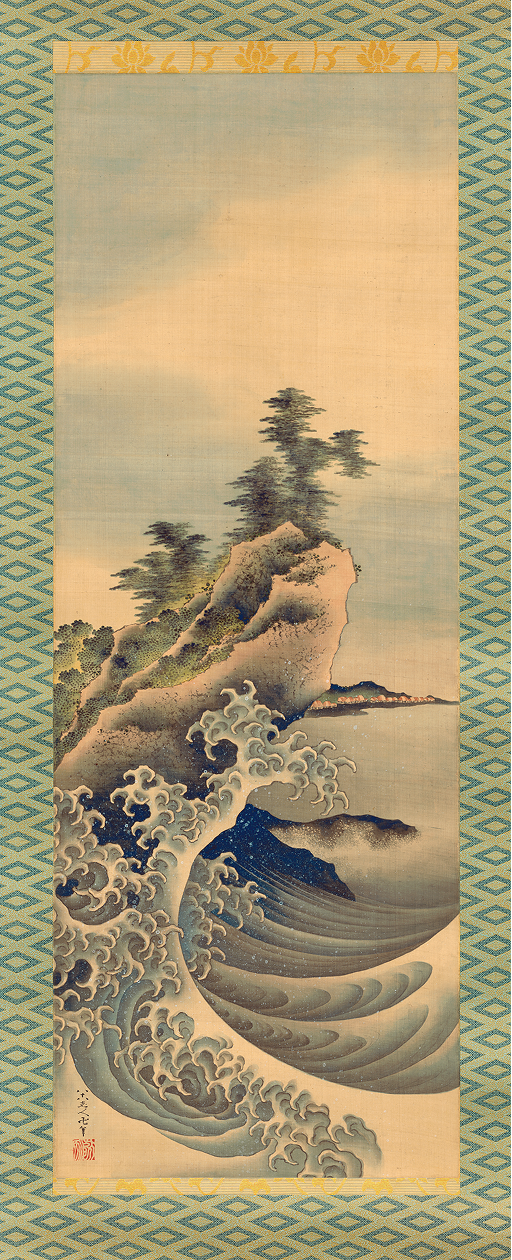
Breaking Waves
Katsushika Hokusai (1760–1849)
1847
Hanging scroll; ink and color on silk
126.0 cm × 46.7 cm
National Museum of Asian Art, Smithsonian Institution, Gift of Charles Lang Freer, F1905.276